Sleep Apnea Treatment
If you snore loudly, wake up tired no matter how long you slept, or your partner has noticed you stop breathing at night, there may be a reason worth looking into. At Bettendorf Dental we fit custom ProSomnus® sleep appliances, a small, quiet alternative for people who cannot tolerate a CPAP machine.
We work alongside board certified sleep physicians so that patients across Bettendorf and the Quad Cities get a proper diagnosis first and the right treatment second. Call our office at (563) 332-1600 to set up a consultation.
What Is Actually Happening While You Sleep
Snoring
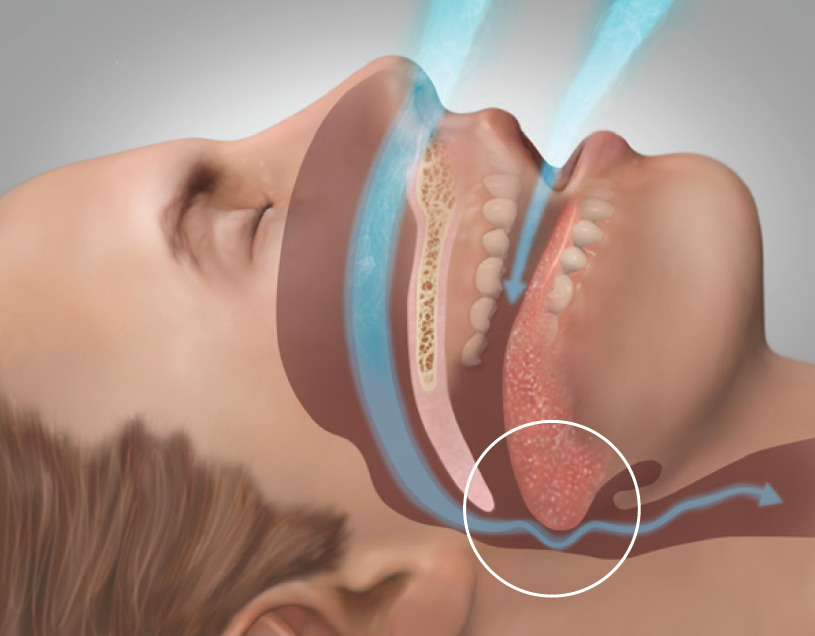
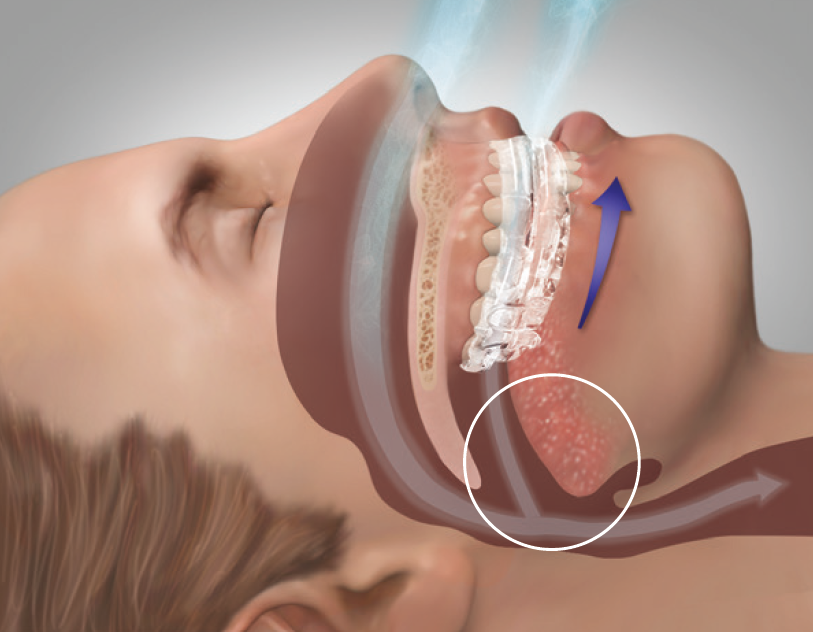
As you fall asleep, the muscles in your tongue and throat relax and your airway narrows. Snoring is the sound of air forcing its way through that narrowed space and vibrating the soft tissue as it passes. On its own, snoring is common and not dangerous. What matters is whether it is happening alone or as the audible symptom of something larger.
Obstructive Sleep Apnea
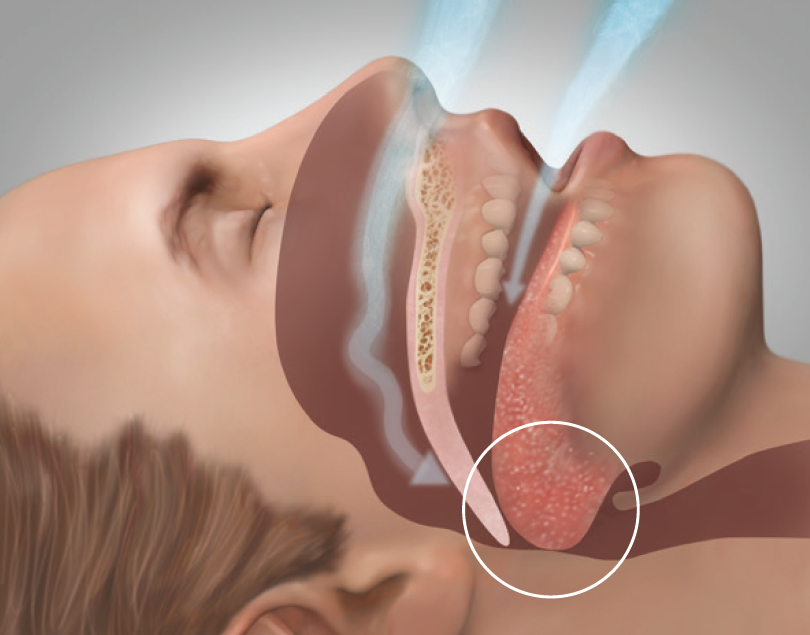
In obstructive sleep apnea the airway does not just narrow, it closes. The tongue and soft tissues collapse against the back of the throat and air stops reaching the lungs. Blood oxygen falls, heart rate climbs, and the brain registers the emergency and pulls you toward waking just long enough to take a few recovering breaths. Then you drift back down and the cycle restarts. In moderate to severe cases this can repeat dozens of times an hour, all night. You almost certainly will not remember any of it. That is the difficulty with sleep apnea. The person who has it is usually the last to know, and it is a spouse or partner who notices first.
How an Oral Appliance Helps
A custom oral appliance addresses the mechanical cause of the obstruction. Worn only during sleep, it holds your lower jaw in a slightly forward position. Because your tongue is anchored to your lower jaw, moving the jaw forward moves the tongue with it, pulling it away from the back of your throat and holding the airway open. Less collapse means less vibration, fewer breathing interruptions, and quieter, more continuous sleep.
Signs of Sleep Apnea You Might Recognize
Some of these are obvious. Most are not, which is why sleep apnea often goes unaddressed for years.
What happens at night
- Loud, chronic snoring
- Gasping, choking, or coughing during sleep
- Breathing that stops and restarts, usually noticed by a partner
- Waking with a dry mouth or sore throat
- Morning headaches
What happens during the day
- Exhaustion that a full night in bed does not fix
- Falling asleep at your desk, in a waiting room, or at a red light
- Trouble concentrating or holding onto details
- Irritability, low mood, or losing interest in things you used to enjoy
What shows up at your physical
- Blood pressure that is difficult to control
- Irregular heartbeat
- Type 2 diabetes
- Weight that climbs despite your effort
Recognize three or more? That is worth a conversation. A consultation does not commit you to treatment. It starts with a screening and a look at your airway.
The Health Risks of Untreated Sleep Apnea
Sleep apnea is not only a sleep problem. Every time your breathing stops, your body treats it as a stress event. Oxygen drops, blood pressure spikes, and your cardiovascular system absorbs the hit. Repeated hundreds of times a night, year after year, that stress accumulates.
Research has linked untreated obstructive sleep apnea to:
- Cardiovascular disease. The American Heart Association has issued a scientific statement identifying obstructive sleep apnea as a condition associated with high blood pressure, arrhythmia, stroke, and heart failure.
- Metabolic disease. Sleep apnea is strongly associated with type 2 diabetes and with difficulty losing weight.
- Daytime accidents. Drowsiness behind the wheel is a documented contributor to serious motor vehicle crashes every year.
- Memory and mood. Difficulty concentrating, memory problems, and depression are commonly reported.
It is also badly underdiagnosed. Recent research published in Respiratory Medicine estimates that roughly 83.7 million American adults, about 32 percent, have obstructive sleep apnea, and the large majority have never been diagnosed.
The reason to know this is not to frighten you. It is that sleep apnea is one of the more treatable conditions on that list. Testing is straightforward, it usually happens at home, and for many people the treatment is a device that fits in a shirt pocket.
Should You Get Screened? A Two Minute Self Check
Answer yes or no:
- Have you been told you snore loudly, loudly enough to be heard through a closed door?
- Do you often feel tired or worn out during the day, even after a full night in bed?
- Has anyone ever seen you stop breathing, gasp, or choke while asleep?
- Do you have high blood pressure, or are you being treated for it?
- Do you ever fight to stay awake while driving, reading, or watching television?
Zero to one yes: sleep apnea is less likely, but mention any of these at your next visit.
Two to three yes: worth screening. Bring this up at a consultation.
Four to five yes: please do not wait on this. Call us and we will get you screened.
This is a screening prompt, not a diagnosis. Only a sleep physician can diagnose sleep apnea, and we will help you get there.
Your Path to Treatment, Step by Step
Most people put this off because they picture a sleep lab, a mask, and a machine. Here is what actually happens.
Step 1: Screening at Bettendorf Dental
We review your symptoms and examine your airway, jaw, and bite to determine whether testing is warranted. About 30 minutes. You do not need a referral to start here.
Step 2: A sleep study
If screening suggests sleep apnea, we coordinate testing with a board certified sleep physician. In most cases this is a home sleep test, meaning you sleep in your own bed with a small monitor. A physician reviews the results and makes the diagnosis.
Step 3: Choosing your therapy
If you are diagnosed with obstructive sleep apnea, the sleep physician prescribes treatment. CPAP is highly effective and remains the first line option. If you cannot tolerate CPAP or prefer an alternative, the physician can prescribe oral appliance therapy, and that is where we take over.
Step 4: Your custom appliance
We take a scan of your teeth and your ProSomnus device is manufactured to your anatomy. We fit it here, typically within two to three weeks.
Step 5: Adjustment and follow up
Your appliance is adjustable. We move the jaw position in small increments to find the setting that works for you, and we monitor your bite and jaw over time. Your sleep physician confirms the therapy is working. This follow up is part of the standard of care, and it is included.
The ProSomnus Sleep Device
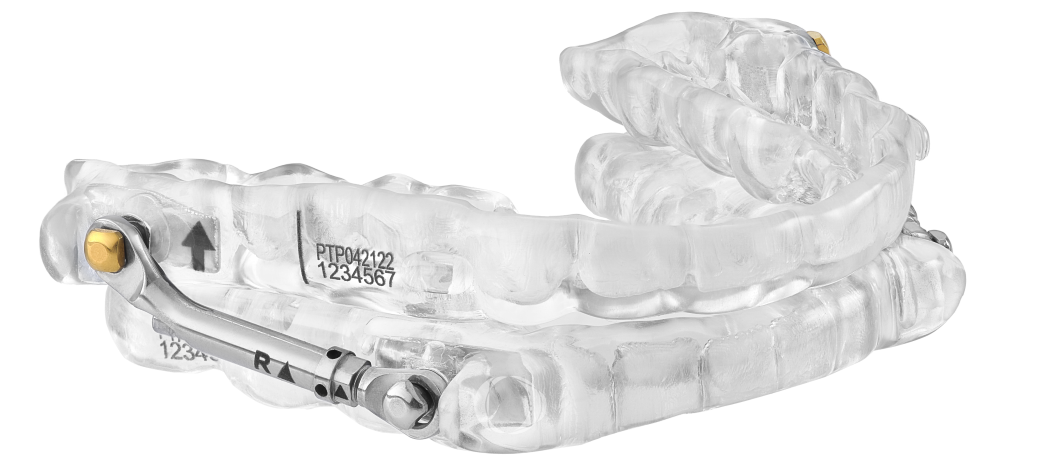
Bettendorf Dental fits ProSomnus® oral appliances, precision manufactured custom devices designed specifically for treating snoring and obstructive sleep apnea.
- Small and silent. No mask, no hose, no motor, no electricity. Nothing to wake a partner.
- Made for your mouth. Manufactured from a scan of your own teeth rather than adapted from a stock tray.
- Adjustable. We fine tune the jaw position over your first few weeks until the fit is right.
- Travels easily. It fits in a case about the size of a glasses case and needs no outlet.
Is an oral appliance right for everyone?
No, and we would rather tell you that here than after you have committed. Oral appliance therapy works best for snoring and for mild to moderate obstructive sleep apnea, and for people with severe sleep apnea who genuinely cannot tolerate CPAP. Some patients notice temporary jaw soreness or extra saliva in the first couple of weeks. Over the longer term an appliance can produce small changes in your bite, which is exactly why follow up with a qualified dentist is part of the treatment rather than an afterthought. We will tell you honestly at your consultation whether you are a good candidate.
Sleep Apnea Appliance FAQ
Is snoring always sleep apnea?
No. Plenty of people snore without having sleep apnea. Snoring becomes a concern when it is chronic and loud, or when it comes alongside daytime exhaustion, morning headaches, or pauses in breathing that someone else has noticed. A screening can tell the difference.
Can my dentist diagnose sleep apnea?
No. Diagnosing obstructive sleep apnea requires a sleep study interpreted by a physician. Dentists screen for it, refer patients for testing, and once a physician has diagnosed sleep apnea and prescribed oral appliance therapy, provide and manage the appliance.
Do I have to spend the night in a sleep lab?
Usually not. Most patients are tested with a home sleep test using a small monitor worn in their own bed. In lab studies are reserved for more complex cases.
Is an oral appliance as effective as CPAP?
CPAP reduces breathing events more effectively. That said, an appliance you actually wear every night can outperform a CPAP machine that sits in a closet, and people tend to stick with oral appliances. For patients who cannot tolerate CPAP, an appliance is the recommended alternative.
Is this the same as a mouthguard from the drugstore?
No. A drugstore boil and bite device is not custom, not adjustable, and not fitted or monitored by a dentist. Clinical guidelines specifically recommend a custom, adjustable appliance over a non custom one.
Does it hurt?
Most patients adapt within one to two weeks. Some notice mild jaw soreness or extra saliva early on, and that usually settles. We adjust the device gradually to keep it comfortable.
How long does an appliance last?
Most last several years with proper care. We check its condition at your regular visits and replace it when needed.
How do I get started?
Call Bettendorf Dental at (563) 332-1600 or book online. We will screen you, explain your options, and coordinate testing with a sleep physician if it is warranted.
Stop Guessing About Your Sleep
You have probably suspected something was off for a while. A screening takes about half an hour and gives you a real answer, either reassurance or a clear path forward.


Hiba Nourahmed, DDS
ProSomnus and EVO are registered trademarks of ProSomnus Sleep Technologies, Inc. Device images used with permission.
Serving Bettendorf, Davenport, Riverdale, Pleasant Valley, and the greater Quad Cities.